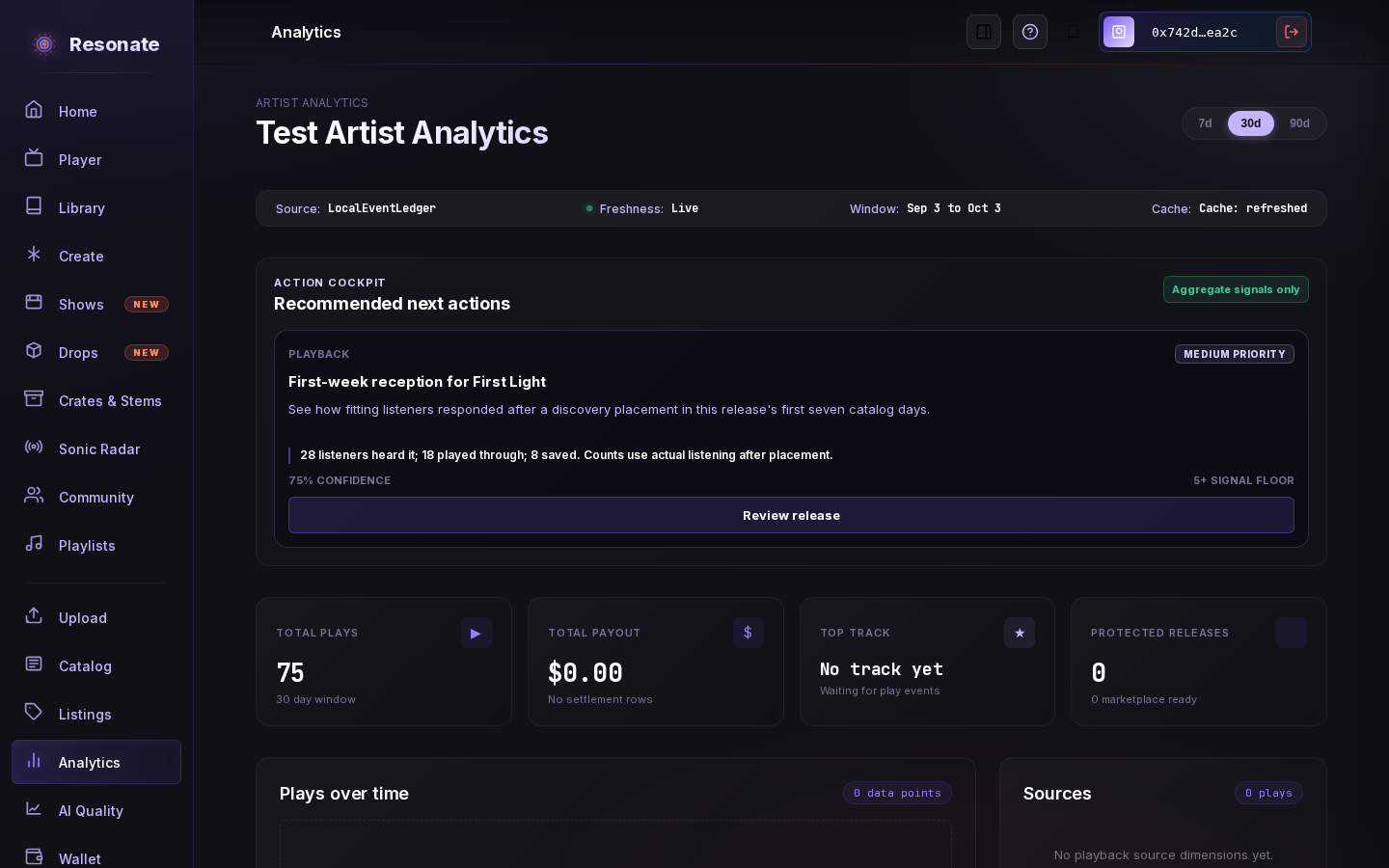
#Your dashboard
- Plays over time, shown as a trend you can scan at a glance.
- Gross sales: settled stablecoin sales of your music before the platform fee and royalty splits. This is not the amount you received. Sales paid in a native token are counted, but not converted to US dollars.
- Content-protection activity and your staking history.
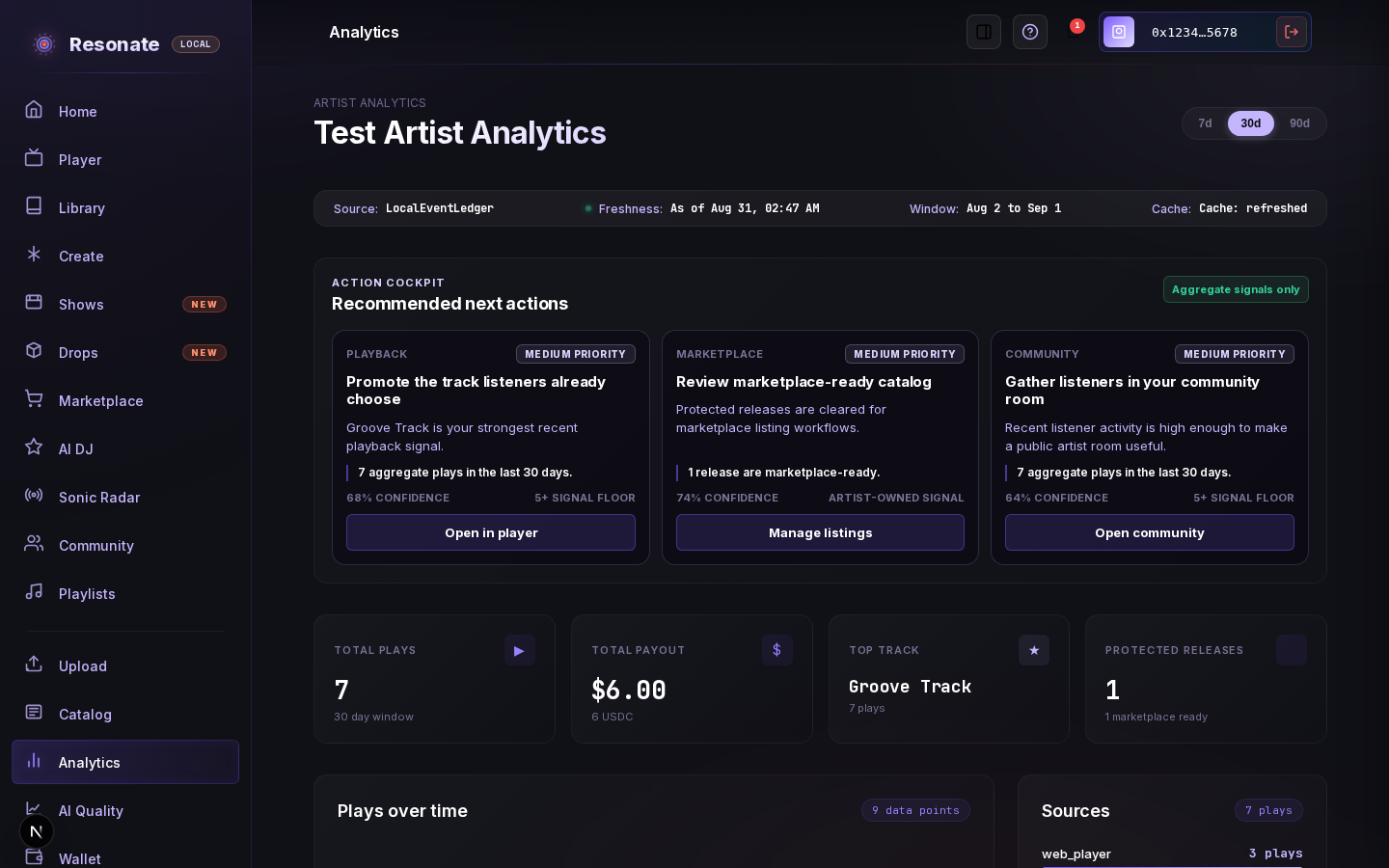
#The action cockpit
Alongside the numbers, the dashboard suggests concrete next steps — for example promoting a top track, listing marketplace-ready stems, activating a community room, reviewing city demand for a show, or posting a campaign update. Each card links straight to where you'd act.
#Scene Scout: where a release connects
Scene Scout suggests cities where enough listeners connect with a release over seven or 28 days. A listen connects when someone plays at least 90% of a track and then replays or saves it within seven days. The cards use shared totals, never individual listeners or their locations. If the audience is too small, the Scene Scout panel on your dashboard says Not enough listening yet.
Choose Draft a show to open a campaign with the city and release context filled in. Review and edit the details before saving. Your saved draft keeps the release connection while the selected artist is credited on it; choosing an artist who isn't credited removes that connection. A suggestion does not create or publish a campaign, and it does not predict income. Follows count as demand only from listeners who allowed usage measurement, shared a city and still follow you; they never appear as a public follower count. The app does not yet ask listeners for a city when they follow, so ordinary follows do not add city demand yet. Pledges count only with confirmed payment, a release connection, and a city the backer chose to share with usage measurement on. When usage measurement is on, the pledge card offers an optional "Your city" field; leaving it blank means that pledge adds no city demand.
#Scene Scout: searched but missing
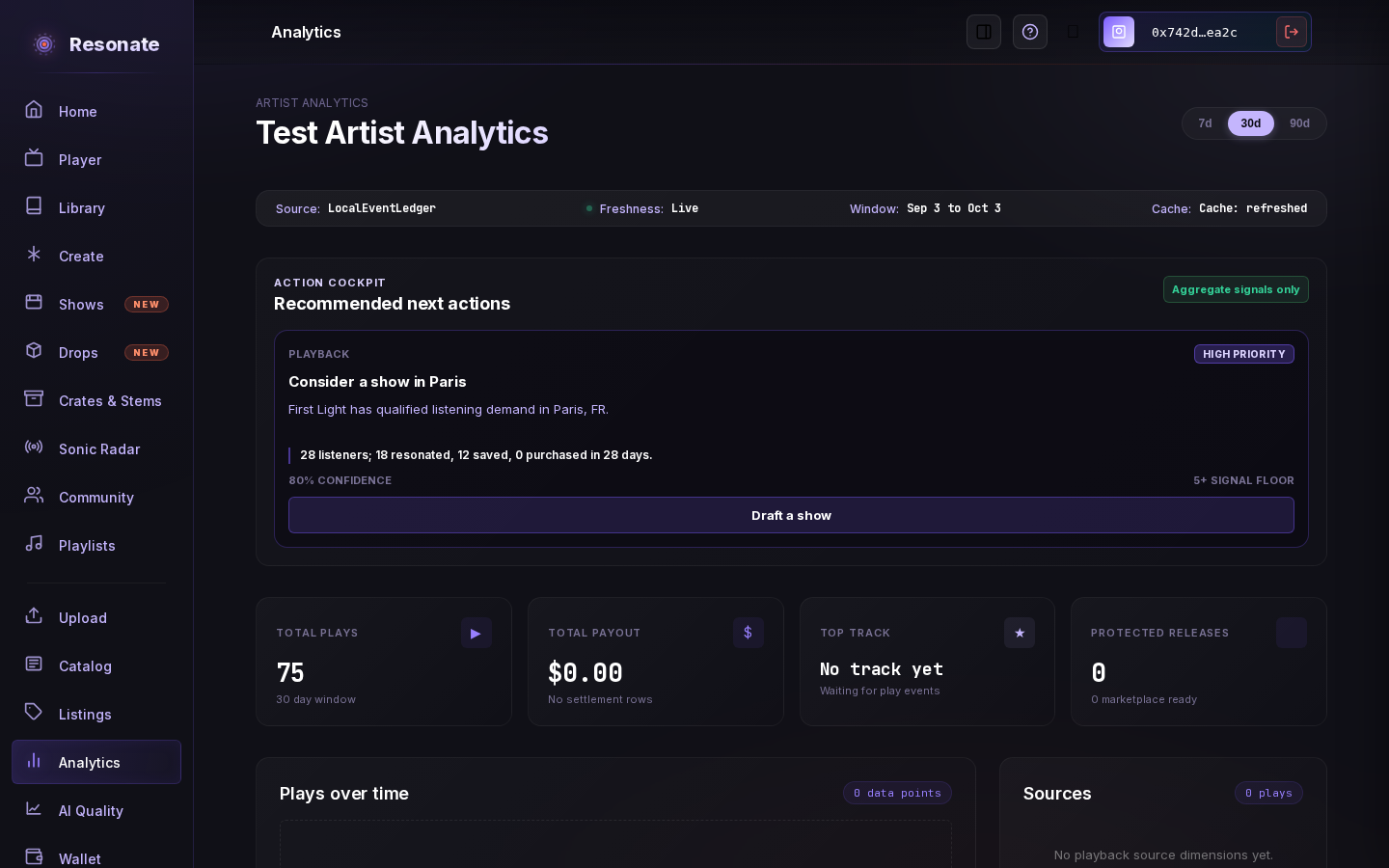
When enough people ask for matching catalog supply and come up short, Scene Scout can suggest a missing stem or license to review. The cards show shared request totals, never who asked or their original words. A small audience shows Not enough request demand yet. A request gap is not a promise of sales.
Choose Publish this stem or List this license to open the relevant track in your release. Prepare missing stems if needed, then review the existing rights checks, terms and confirmation steps. The suggestion does not publish anything for you. Other supply gaps open your catalog for review.
#Scene Scout: your first listeners
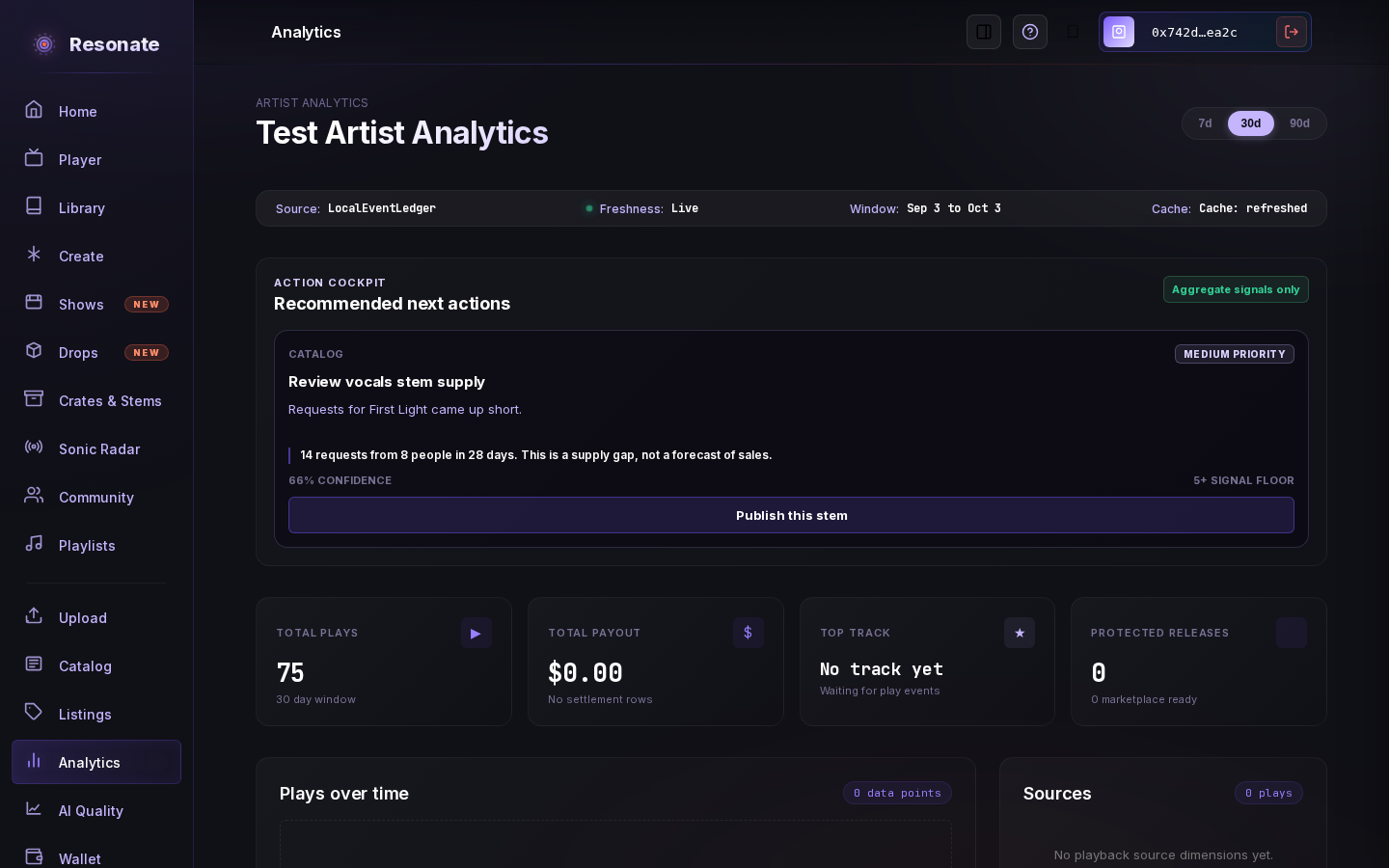
A fresh playable release by a verified human artist can reach listeners whose taste fits it through their existing discovery picks. Listener preferences, hidden artists, diversity and exposure limits still apply. Fully AI-generated releases cannot use this discovery slot, and the artist cannot buy it.
After seven catalog days, a reception card can show how many discovery listeners actually heard the release, played at least 90% through or saved it. A placement alone is not a play. Counts need enough consenting listeners; a small sample says Not enough discovery listening yet, and suppressed save, follow or full-play totals say not enough data. A follow counts when a listener who heard the release after its placement followed you and still follows. Choose Review release to decide your next step.